Media convergence
Media Convergence

Advantages of media convergence:
Quicker way of accessing information.
- Saves time as everything can be accessed online via search engines.
- Allows the use of one device to communicate (calls, SMS), shoot content (videos and photos)

- Allows interactions between people that aren’t in the same location.
- Creates communities were people share relatable content
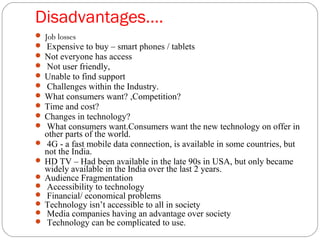
Disadvantages of media convergence:
- Creates information overload for certain individuals.
- Gives rise to misinformation.
- Messages sent out can be misinterpreted and create distractions to organisations.
- Security concerns and cyber attacks
- PRPs may be vulnerable as they will receive harsh critics
Examples of media convergence:
The easiest aspect of convergence to comprehend is its technological component. Billions of people now have access to media material that was previously restricted to platforms (newspapers, magazines, radio, television, and cinema) or communications medium (print and broadcast) thanks to the World Wide Web, smartphones, tablet computers, smart televisions, and other digital devices.
2. Social

Social media, a new force in the convergent media landscape, combines technologies, platforms, and services for communication between individuals. It gained prominence with Web 2.0 sites in the 2000s, aiming for user-focused, decentralized, and flexible participation. Social media platforms like Facebook, Twitter, YouTube, and blogs have rapidly grown, with Facebook having over one billion members by 2012 and YouTube posting 72 hours of video every minute, attracting over four billion daily views.
Media convergence expanded:
Conclusion...
A media policy and the idea of media convergence go hand in hand.
In the era of global media, this strategy upholds values including variety of
ownership and content, community standards-based access regulation, and local
content requirements. For instance, Google, Inc. is a major player in providing
worldwide audiences with access to news and TV programming.
As K.K , my first 2 blogs were more or less similar. One giving more insights on the other. Explaining where business innovations are in 2024.
The future blogs will be a continuation of the technological era ...

Wow!🙂I learnt alot
ReplyDeleteThank you for engaging
DeleteLove it! This is very informative, I am definitely tunning in for more.
ReplyDeleteI'm glad I could help...
DeleteLove this blog, very detailed information 👌
ReplyDeleteThank you.
DeleteInformative blog!!! #yourock
ReplyDeleteThank you
DeleteCyber attacks and misinformation really messes people's lives, that's one aspect we should really dive into.
ReplyDeleteWe really should...stay tuned though
Delete